Vancouver averages 161 rainy days per year. That's not a statistic — it's a personality trait. The city doesn't just tolerate rain; it builds its identity around it. The temperate rainforest that surrounds Vancouver exists because of this precipitation. The emerald green of Stanley Park in January is a direct result of water falling from the sky for six months straight. And if you're renting a luxury car in this city, you will drive in the rain. Probably on your first day. Possibly within an hour of pickup.
The good news: modern luxury vehicles are engineered for exactly this. The bad news: engineering doesn't eliminate physics, and Vancouver's rain creates specific driving conditions that even the most advanced all-wheel-drive system can't override. Here's what you need to know about handling a $150,000-plus vehicle in the wet — including how the BMW XM, Mercedes G-Class, and Porsche 911 each respond when the pavement gets slick.
The Vancouver Rain Reality
Not all rain is equal, and Vancouver has several distinct varieties:
The mist: Barely visible precipitation that somehow soaks through every layer of clothing. The pavement looks dry but isn't. This is the most deceptive condition because drivers don't adjust their behavior — they see dry-looking asphalt and maintain highway speeds on tires that have lost 30% of their grip.
The drizzle: Persistent light rain that keeps windshield wipers on intermittent for hours. Roads accumulate a film of water, oil, and tire residue that creates a slippery surface even at moderate speeds.
The downpour: Intense rain that reduces visibility to a few car lengths and creates standing water on highways. Hydroplaning becomes a genuine risk, particularly in the outer lanes where water pools.
The first rain after a dry spell: The most dangerous condition of all. Weeks of dry weather allow oil, grease, and rubber residue to accumulate on the pavement. The first rainfall lifts this layer into a slick film that lasts for the first 10 to 20 minutes of precipitation. Accident rates spike during these transitions.
How Each Mogestic Vehicle Handles the Wet
BMW XM: The Technology Solution
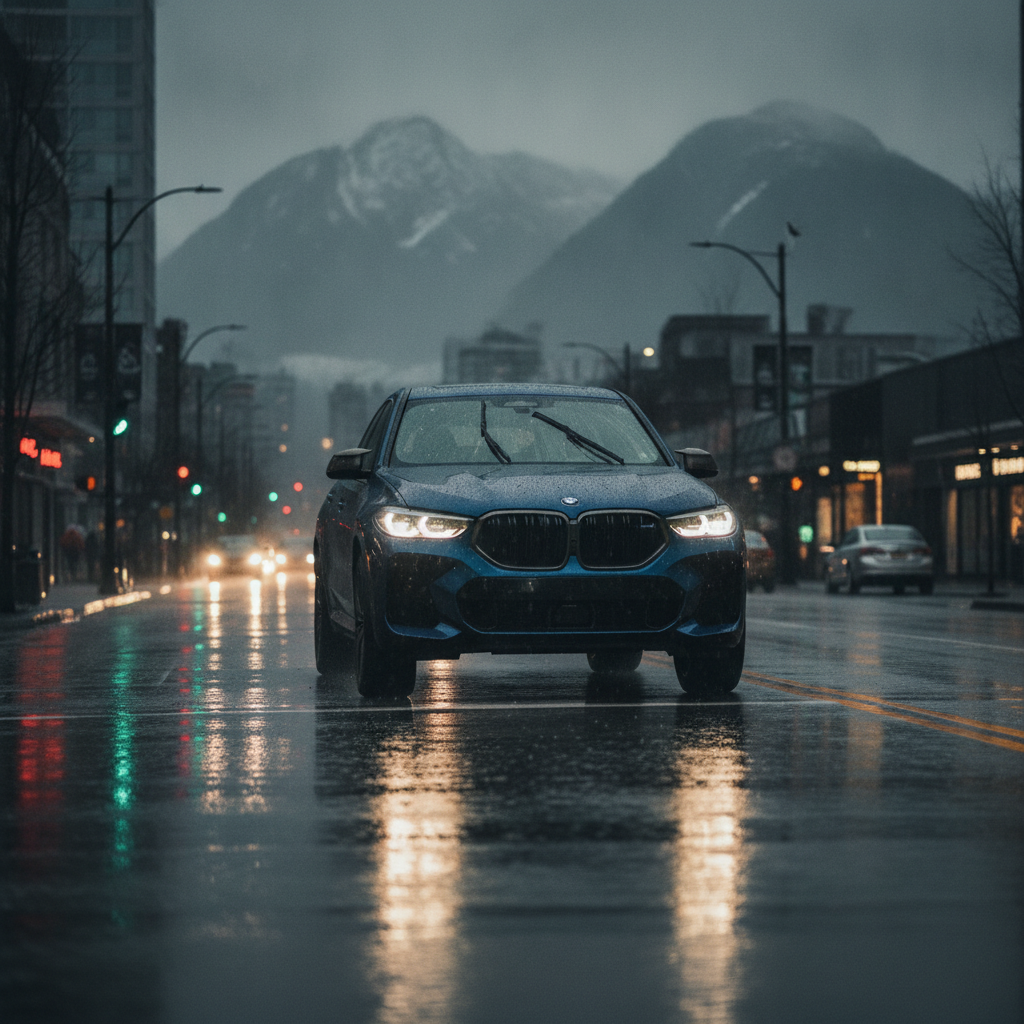
The XM is the most rain-capable vehicle in Mogestic's fleet, and it's not particularly close. The combination of all-wheel drive, adaptive suspension, and advanced driver-assistance systems creates a driving experience that feels almost indifferent to precipitation.
The xDrive system distributes torque between the front and rear axles in real time, sending power to whichever wheels have grip. On wet pavement, this means the XM accelerates with confidence even when the surface is slick. The adaptive M suspension adjusts damping rates based on road conditions, keeping the tires in contact with the pavement through corners that would unsettle a less sophisticated chassis.
The driver-assistance suite includes features that matter in rain: automatic emergency braking with wet-road detection, lane-keeping assist that functions even when lane markings are partially obscured by water, and adaptive LED headlights that adjust their beam pattern to reduce glare from rain droplets.
One subtle advantage: the hybrid drivetrain. The electric motor's instant torque delivery is smoother than an internal combustion engine's power delivery, which means less likelihood of wheel spin when accelerating from a stop on wet pavement. The XM pulls away from intersections with a calm, controlled surge rather than a sudden burst that might break traction.
Best for: Consistent rain, highway driving in wet conditions, city traffic where stop-and-go acceleration on slick pavement is frequent.
Mercedes G-Class: The Confidence Choice
The G-Class handles rain differently than the XM. Where the BMW uses technology to compensate for conditions, the Mercedes uses mass and mechanical grip. The G-Wagon weighs nearly 5,800 pounds — roughly 1,200 pounds more than the XM — and that weight presses the tires into the pavement with authority.
The three locking differentials are overkill for paved roads in any condition, but the all-wheel-drive system and the high seating position create a sense of command that matters psychologically. In heavy rain, being able to see over the spray from other vehicles is a genuine safety advantage. The G-Class's boxy shape and flat windshield create more wind noise than the XM, but they also provide better outward visibility in all directions.
The G-Class comes equipped with all-season tires that include the M+S (mud and snow) designation, meaning they're designed to handle water evacuation better than pure summer performance tires. In winter, Mogestic equips the G-Class with full snow tires, which provide even better wet-weather performance.
Where the G-Class is less ideal is in emergency maneuvering. The high center of gravity and substantial weight mean that while the G-Wagon is stable in a straight line, aggressive lane changes or sharp avoidance maneuvers on wet pavement require more caution than in the lower, heavier XM.
Best for: Heavy rain, mountain roads with standing water, drivers who prioritize visibility and presence over agility.
Porsche 911 Carrera S: The Enthusiast's Challenge
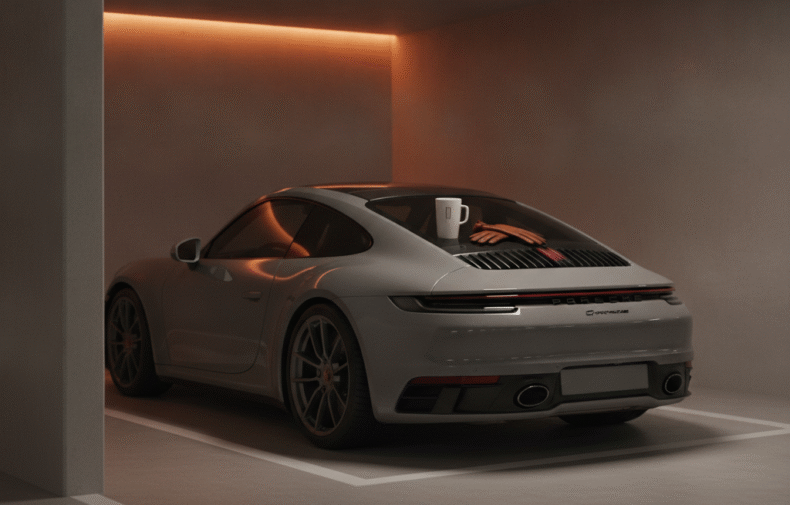
The 911 is the most capable sports car in the rain — and the least forgiving if you get it wrong. Porsche's engineering includes a specific Wet Mode that detects water on the road and adjusts the stability control, throttle response, and all-wheel-drive torque distribution to prioritize safety over performance. It's a remarkable system that makes the 911 genuinely usable in conditions that would terrify most rear-wheel-drive sports cars.
But the 911 comes with summer performance tires that are optimized for dry grip, not wet evacuation. The wide rear tires — 305 millimeters across — create a large contact patch that can hydroplane more easily than narrower tires if the tread depth is marginal or the water depth is significant.
The rear-engine layout provides excellent traction under acceleration, but it also creates a weight distribution that can surprise drivers unfamiliar with the chassis. Lift off the throttle mid-corner on a wet road, and the rear weight transfer can induce oversteer faster than most drivers can react. The 911's stability control is excellent at catching these moments, but the threshold is lower than in the XM or G-Class.
Practical reality: the 911 is fine in Vancouver's mist and drizzle. It's capable in moderate rain with the Wet Mode engaged. But in a genuine downpour, particularly on the Sea to Sky Highway where water can pool in the outer lanes, the 911 demands respect and reduced speeds that somewhat defeat the purpose of renting a sports car.
Best for: Light to moderate rain, dry days with occasional showers, drivers who understand chassis dynamics and can modulate inputs smoothly.
Wet Weather Driving Tips Specific to Vancouver
Watch the first 10 minutes. The most dangerous period of any rainfall is the first 10 minutes, when oil and residue create a slick film. If you're driving when rain starts, reduce speed immediately and increase following distance. Don't wait for the road to look wet — it already is.
Avoid the outer lanes on highways. The Sea to Sky Highway, Highway 1, and the Lions Gate Bridge all have outer lanes where water accumulates. The inner lanes are typically better drained. On multi-lane roads, the right lane is often the wettest.
Don't use cruise control. This applies to any vehicle in any rain, but it's worth repeating. Cruise control can accelerate unexpectedly when hydroplaning occurs, making recovery more difficult. Maintain manual throttle control in wet conditions.
Check your wipers at pickup. This seems obvious, but most renters don't do it. Activate the wipers during the vehicle walkaround. If they streak, chatter, or leave unwiped sections, ask for a replacement vehicle or new wiper blades. In Vancouver, functional wipers are not optional.
Be cautious with regenerative braking. The BMW XM's regenerative braking system can be surprisingly aggressive when you lift off the accelerator. In wet conditions, this can induce rear-wheel slip if you're not expecting it. Use the brake pedal for smooth, predictable deceleration rather than relying entirely on lift-off regen.
Watch for cyclists and pedestrians. Vancouver's cycling infrastructure is extensive, and cyclists don't stop for rain. They're less visible, more likely to make sudden maneuvers to avoid puddles, and less predictable in wet conditions. The XM's cyclist detection and the G-Class's excellent outward visibility both help, but attention is still required.
The Tire Factor
The single most important variable in wet-weather performance is not the vehicle — it's the tires. A 911 on fresh Michelin Pilot Sport all-season tires is safer in the rain than an XM on worn summer performance tires.
Mogestic maintains its fleet with high-quality tires and replaces them before tread depth reaches critical levels. But it's worth asking about the specific tires on your vehicle when you book, particularly if you're renting in October through April when Vancouver's rain is most persistent.
The G-Class's all-season tires with M+S rating provide the best year-round wet performance. The XM's tires are similarly capable. The 911's summer tires are excellent in warm, dry conditions but less effective in cold, wet weather. If you're renting the 911 for a November trip, confirm tire specifications — winter tires transform the 911's wet-weather capability, but they're not standard equipment.
FAQ
Is it safe to drive a Porsche 911 in Vancouver rain?
Yes, with caution. The 911 has all-wheel drive, Wet Mode, and excellent stability control. But the summer tires and rear weight bias require smoother inputs than the XM or G-Class. In heavy downpours, reduce speed and avoid standing water.
Which vehicle is safest for a rainy Vancouver weekend?
The BMW XM. Its combination of all-wheel drive, adaptive suspension, advanced driver-assistance systems, and hybrid traction control make it the most capable and confidence-inspiring choice in consistent rain.
Do I need winter tires for rain?
Not specifically for rain, but winter tires provide better wet-weather performance than summer tires in cold conditions (below 7°C). The G-Class comes with winter tires in winter months. The XM has all-season tires year-round. The 911 has summer tires by default — confirm winter tire availability if renting in colder months.
What is hydroplaning and how do I avoid it?
Hydroplaning occurs when a layer of water builds between your tires and the road, causing a complete loss of traction. It happens most often at speeds above 80 km/h in standing water. Avoid it by reducing speed, maintaining proper tire pressure, and avoiding large puddles. If you hydroplane, ease off the accelerator, keep the steering wheel straight, and brake gently only after traction returns.
Should I avoid the Sea to Sky Highway in heavy rain?
The Sea to Sky is well-maintained and safe in rain if you drive appropriately for conditions. Reduce speed, increase following distance, and be particularly cautious on the corners north of Squamish where water can accumulate. The highway is rarely closed due to rain alone, but fog and landslides can cause temporary closures.
Can I rent a vehicle specifically for rainy weather?
Mogestic can recommend the best vehicle for your dates and expected conditions. For consistently wet weather, the XM or G-Class are the safer choices. For intermittent showers with mostly dry conditions, the 911 is viable. Call (604) 841-0366 to discuss the forecast and vehicle selection.
Bottom Line
Vancouver's rain is not an obstacle to a luxury driving experience — it's part of the city's character. The mist on the North Shore mountains, the reflections in Coal Harbour, the sound of rain on the XM's panoramic roof — these are sensory details that dry-climate cities simply can't replicate.
The key is matching the vehicle to the conditions and adjusting your driving to match the physics. The XM handles rain with technology and composure. The G-Class handles it with mass and authority. The 911 handles it with precision — but demands precision in return.
Whatever you drive, respect the rain. It's been falling on Vancouver longer than any of us have been here, and it will continue long after we leave. The vehicles are temporary visitors. The weather is permanent.
If you're planning a Vancouver trip during the rainy season and want to discuss which vehicle, which tires, and which routes make the most sense for wet-weather driving, call Mogestic at (604) 841-0366. They'll match you to the right car for the forecast — because in Vancouver, the forecast is the most important part of the trip.
Related posts
 04Sep, 26
 Harrison Hot Springs by Luxury Rental: Two Hours Out, Salmon and Eagles on the Way Back (2026)
 04Sep, 26