2026 in five numbers
Market analyses for 2026 sketch a rental industry mid-transformation, and the numbers are worth having around when you book — they explain a lot of what renters notice in everyday counters and apps:
- Global car rental is heading for roughly $126 billion in 2026, growing 6–8% year over year — a calmer, more stable market than the supply-starved years behind us.
- Luxury grows fastest: the luxury segment is projected near $56 billion this year and compounding around 10% annually — travelers increasingly rent the car as the experience, not just the ride to it.
- SUVs took the crown: in the luxury segment, SUVs led 2025 with about a 38% share by vehicle style and keep compounding ~8% yearly — the family-hauler became the status purchase.
- Electrification is now fleet-standard: EVs are projected at 25–30% of new rental fleet purchases, and the EV-rental slice of the market grows at better than 20% annually.
- Booking moved online: more than 71% of rental revenue now flows through online booking, and in luxury, the online share sits around half and still climbing double digits.
Hybrids won the argument (performance included)
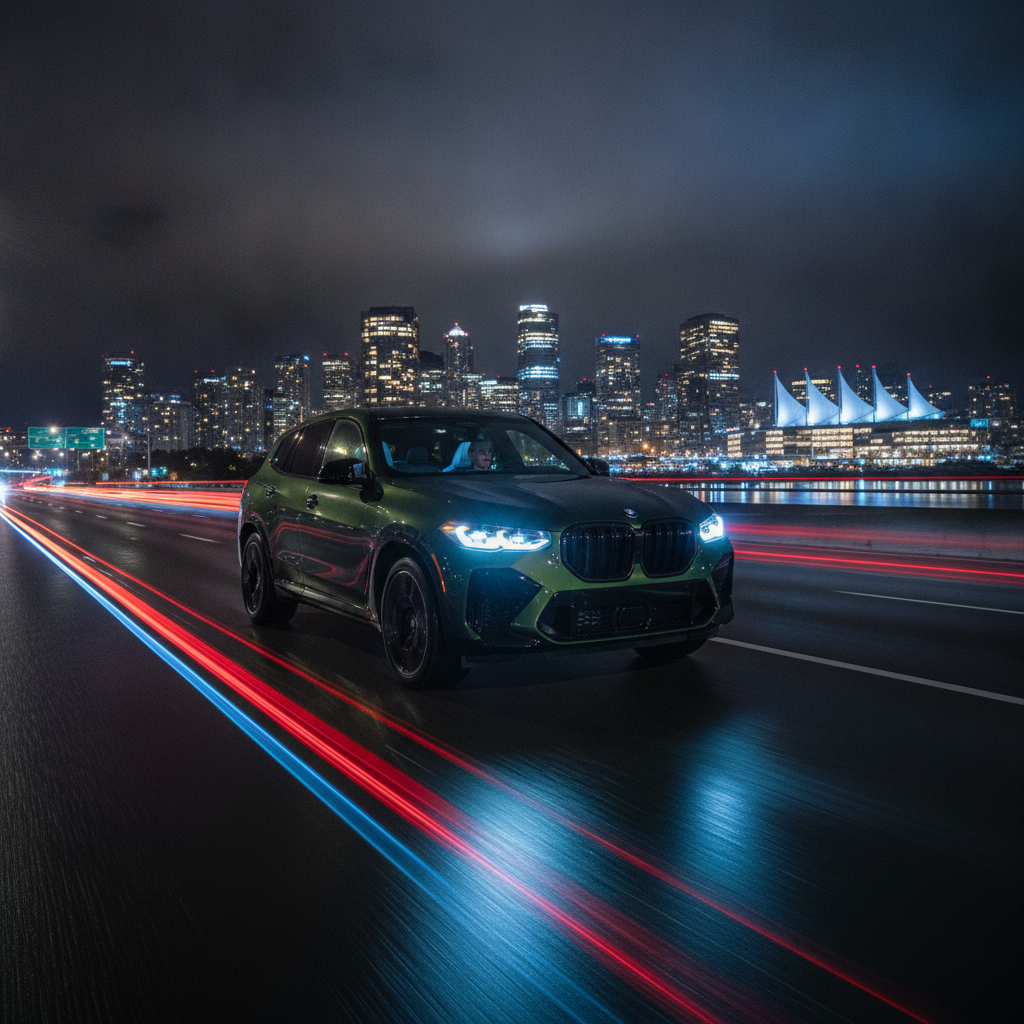
The most interesting shift for renters who love cars: electrification arrived through the performance door, not the efficiency door. The proof case is sitting in our fleet — the BMW XM. BMW's first standalone M car since the M1 pairs a 4.4L twin-turbo V8 with a plug-in hybrid system: 738 horsepower, ~50 km of silent electric city range by EPA numbers, and straight-line pace that embarrasses older V12 flagships. The electrified performance segment stopped being a niche a while ago; renters either embraced it as the default or noticed the quiet, near-instant torque in city traffic and never went back.
For Vancouver specifically, the PHEV sweet spot is unusually visible: a 40-minute electric loop through downtown and Stanley Park doesn't use a drop of fuel, then the Sea-to-Sky to Whistler runs on the V8 with no range-fear at all. Renters get both personalities in one booking — full XM walkthrough here.
SUVs own the curb — and that changes what you should expect
SUV dominance (that 38%+ share) cuts two ways for renters. The good side: premium SUVs are better than ever — the G-Class and XM haul families, luggage, and mountain roads like they were designed for it (they were). The pressure side: SUV demand is exactly where the "or similar" clause bites hardest on big-chain counters — class-based SUV bookings get substituted more often than any other segment, which is why we wrote that clause its own post. When SUVs lead a market, the fine print hides in them first. Book model-level when the shape of the vehicle matters, because at premium SUV rates it always does.
The counter is disappearing — and the replacement is better
With 71%+ of bookings online and AI assistants emerging as a discovery channel, the industry is drifting away from counter-to-counter transactions toward host-driven, experience-led rentals. For renters, the practical translation: fewer queues, but more weight on what's documented — the walkaround footage, the fee schedule shared before payment, the exact-vehicle promise in writing. Our advice in a host-driven market: choose companies whose paperwork is ahead of the handover instead of behind it. The inspection checklist and the fees breakdown exist so "we'll fix it at the counter" has nothing to fix.
The pricing year ahead: calm, modest, negotiable
Market-wide, rates rise modestly in 2026 (roughly +2.8% worldwide, ~1.5–2% in North America), with vehicle availability the best it's been in several years. Renters should expect quieter pricing pressure and more room to shop structure — weekly or multi-day plans, delivery pickups, and scheduling flexibility matter more than pennies on the daily rate. The weekly-vs-daily math post covers where those structural savings actually live.
How this maps onto the fleet
| 2026 trend | Fleet answer | From |
|---|---|---|
| Electrified performance | BMW XM — M Hybrid V8 flagship, ~50 km electric range | $888/day |
| SUV dominance | Mercedes G-Class — the boxy icon with real mountain legs | $625–$650/day |
| Experience-led rentals | Porsche 911 Carrera — the drive-as-occasion pick | $558/day |
Add the host-driven layer — delivery to YVR or your hotel, documented handovers, model-level booking that eliminates "or similar" — and the 2026 playbook is basically done. That's the premium route: call (604) 841-0366, describe the trip, and get one clean quote with the exact car on it.
FAQ: 2026 rental trends
Are rental prices going up in 2026?
Modestly — global analyses put overall increases around 2–3%, with North America closer to 2%. Improved availability has made this the calmest pricing stretch in several years.
Is luxury really the fastest-growing segment?
Yes — roughly 10% annual growth, driven by experience-led travel: people book the car for the memory, not just the trip, and premium SUVs and performance brands lead the way.
Are electric rentals actually practical in Vancouver?
Very — the city's charging network, mild climate, and modest daily distances make EVs and plug-in hybrids easy here. The XM's ~50 km electric range covers most city days without touching fuel.
Why are SUVs so dominant now?
Space, seating, mountain-road confidence, and presence — they photograph and travel well. They're also the segment where "or similar" substitutions are most common at class-based agencies.
What should renters demand in 2026?
The exact vehicle named in the booking, fees disclosed before payment, and documented handover footage. That's the whole list — anything less is 2019 service with 2026 prices.
The trend line ends in the same place
Every direction of the 2026 market — performance electrification, model-level transparency, host-driven service, documented handovers — points renters toward rentals where the car, the price, and the paperwork are all decided in advance. Call Mogestic at (604) 841-0366 and lock yours in; the fleet is already where the industry is headed.
Related posts
 04Sep, 26
 BMW XM vs Porsche 911 in Vancouver: Which One Books Your Day (2026)
 04Sep, 26