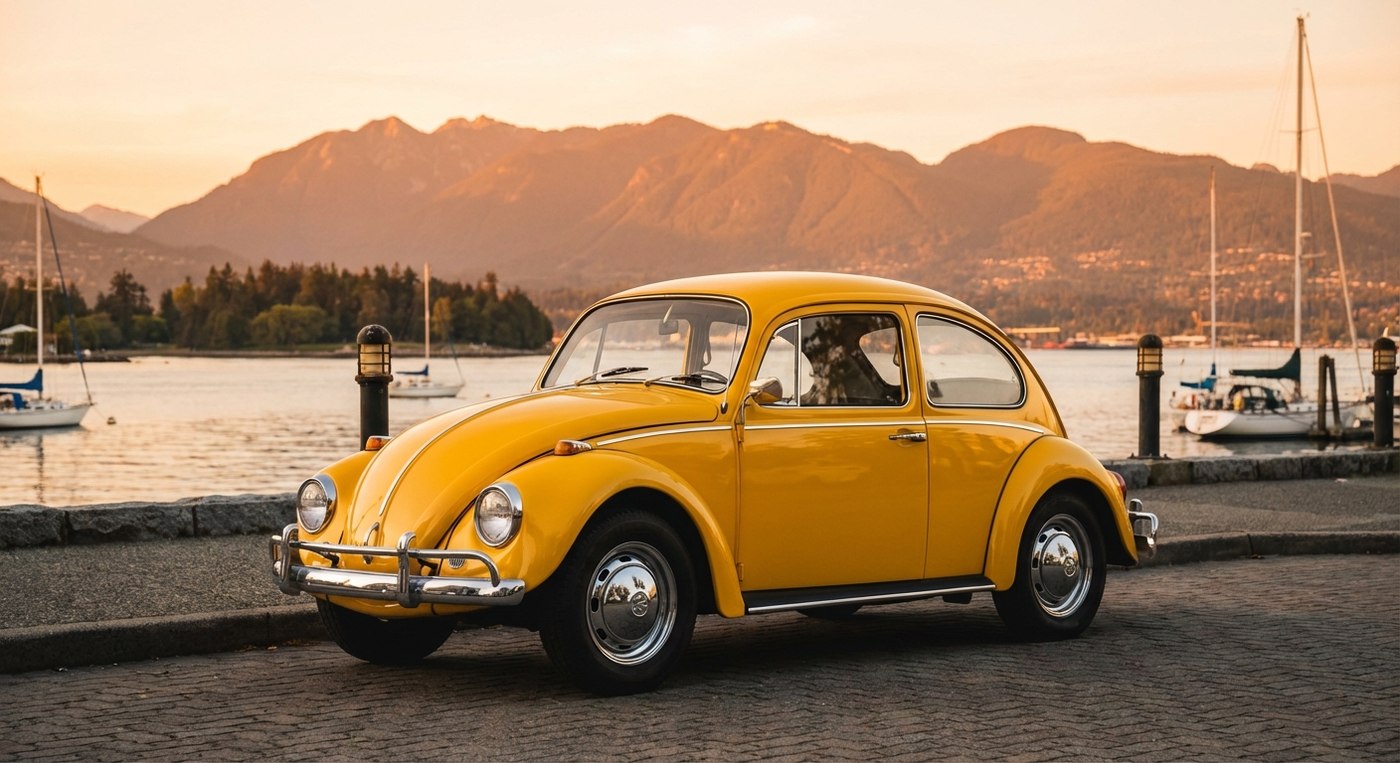
There are cars that get forgotten. And then there is the Volkswagen Beetle. Over 21 million produced across six decades, driven on every continent, featured in films, art, and counterculture movements around the world — the Beetle is not just a classic car. It is arguably the most culturally significant automobile ever made. Here is why it still holds up as one of the greatest classic cars of all time.
A Design That Needed No Revision
The original Volkswagen Beetle — designed in the 1930s by Ferdinand Porsche and refined through the post-war decades — is one of the most aerodynamically efficient shapes ever put on four wheels, arrived at through engineering rather than wind tunnel calculation. The rounded body, rear-mounted air-cooled engine, and symmetrical silhouette were functional choices that happened to produce an icon.
What's remarkable is how little the basic form changed between 1938 and 2003 — over six decades of essentially the same design language. Not because Volkswagen was lazy, but because the shape was right. Very few cars in history can claim that kind of longevity without a fundamental redesign.
The People's Car — And Why That Still Matters
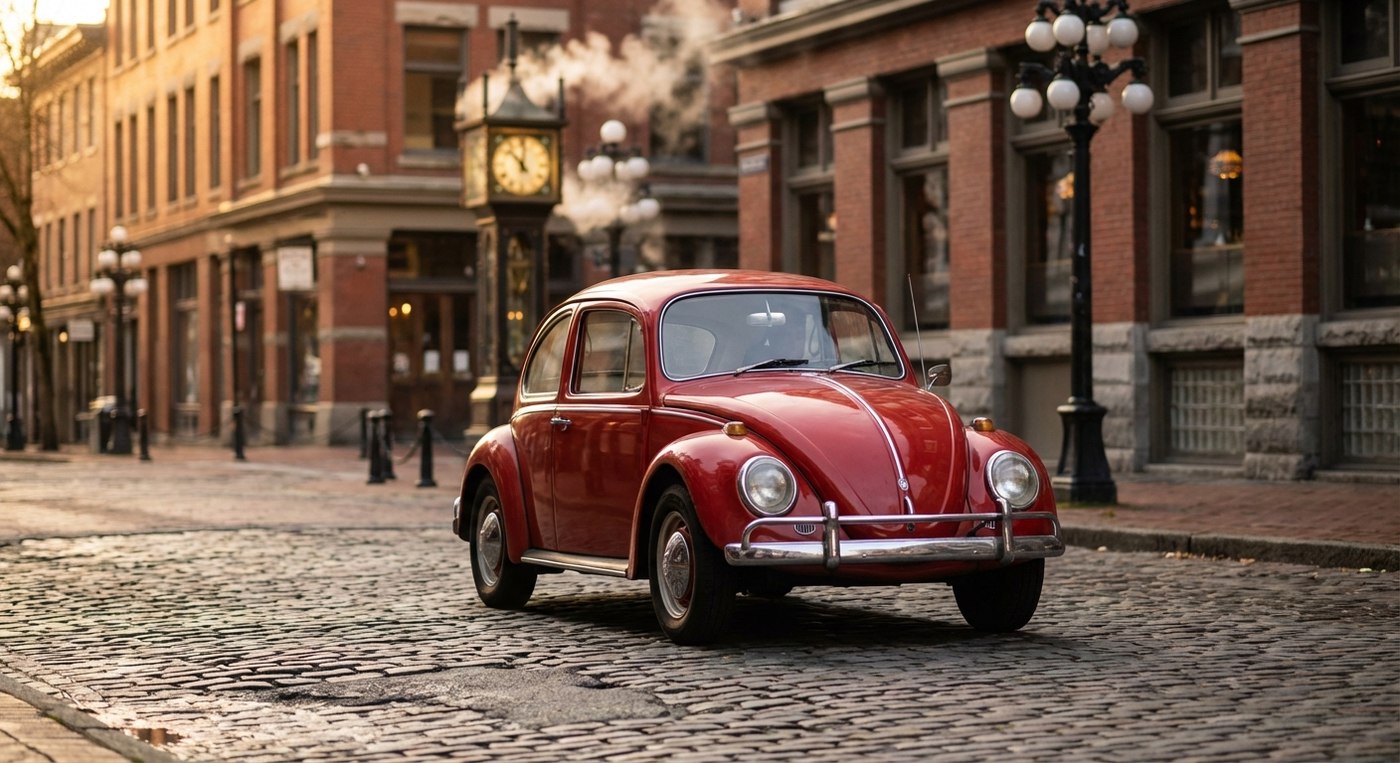
Volkswagen literally translates as "people's car." The Beetle was conceived as affordable, practical transport for ordinary people — and it delivered on that promise at a scale no vehicle has matched since. In post-war Europe, the Beetle put millions of families on the road for the first time. In North America through the 1950s and 60s, it became the antithesis of the excess of the American muscle era — and sold massively because of it.
That democratizing quality is part of what makes the Beetle a genuine classic. It wasn't built for the wealthy or the enthusiast. It was built for everyone, and everyone drove one. The result is a car with more personal history embedded in it — more memories, more road trips, more first cars — than virtually any other model.
What Makes the Beetle Great to Drive
Modern drivers who approach a classic Beetle for the first time often expect something difficult. What they find is something surprisingly honest:
- Light steering — no power steering, but the Beetle is light enough that it doesn't need it. Direct and communicative in a way most modern cars aren't.
- Rear-engine balance — puts weight over the driven wheels, giving the Beetle surprisingly good traction in conditions where you'd expect it to struggle
- Air-cooled simplicity — no water, no radiator, no coolant hoses. The mechanicals are accessible to anyone with basic tools and a workshop manual. This is a car you can understand and maintain yourself.
- Low centre of gravity — the Beetle corners confidently for its era; the handling is tidy and predictable
- Character — every classic Beetle sounds, smells, and feels different from every modern car on the road. Driving one is an event, not a commute.
Cultural Impact: The Car That Defined an Era
No other car has been as embedded in popular culture as the Beetle. It appeared in the Herbie film franchise. It was the vehicle of choice for the counterculture movements of the 1960s. It starred in the Doyle Dane Bernbach ad campaigns of 1959 — "Think Small" — which are widely considered the greatest advertising campaign ever created and changed the direction of the entire industry.
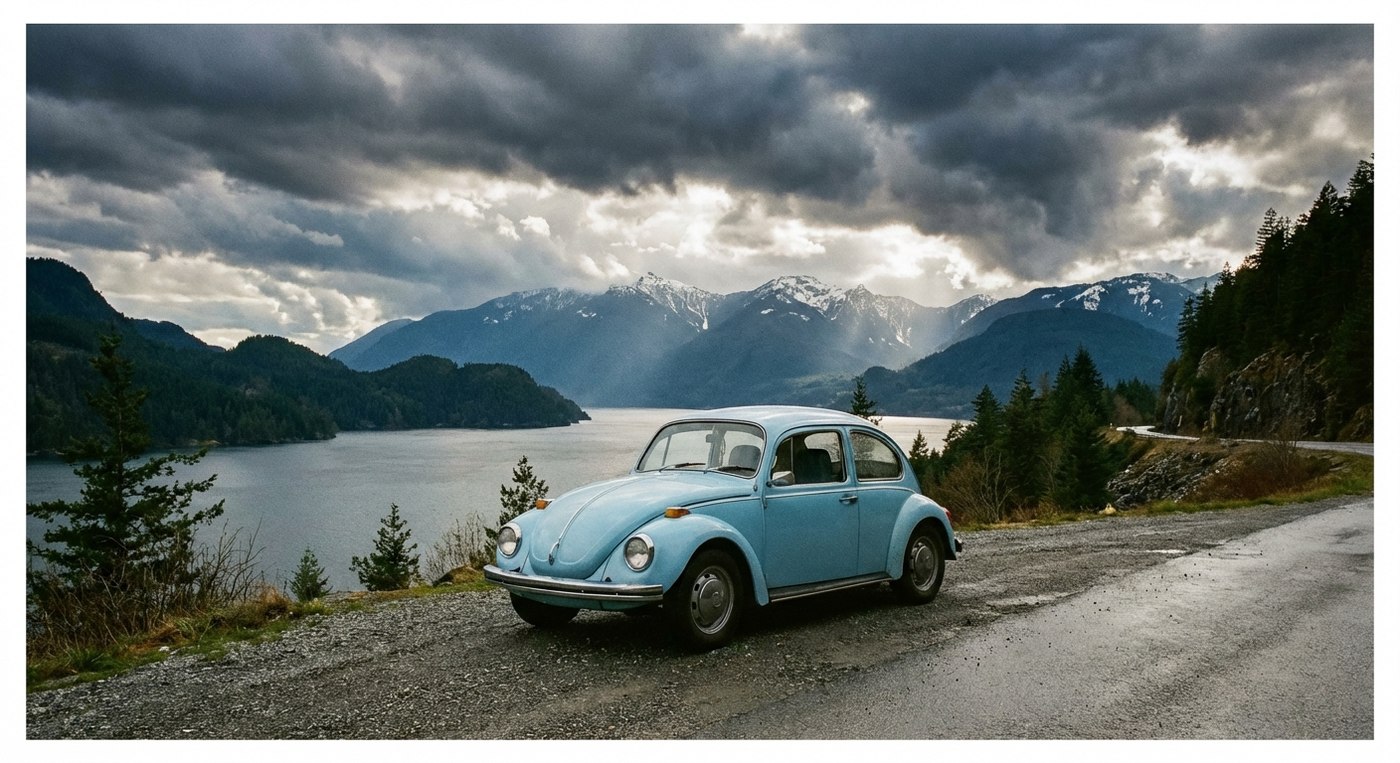
In Vancouver specifically, the Beetle was a fixture of the city's cultural history — from the hippie communes of Kitsilano in the 1970s to the art scene of Gastown. The car carries meaning that no amount of marketing budget can manufacture. It earned it over decades.
Buying a Classic Beetle: What to Look For
For anyone considering a classic Beetle, the market in 2026 is still relatively accessible compared to other collectibles of the same era:
- Pre-1967 models — the most desirable for purists; oval rear window (pre-1953) and split rear window (pre-1953) models command significant premiums
- 1968–1979 — the most practical for daily use; better bumpers, more safety features, still fully air-cooled
- Rust is the enemy — check the floor pans, running boards, fenders, and battery area (under the rear seat) thoroughly. A solid body is worth paying a premium for.
- Engine condition — the air-cooled 1600cc flat-four is tough and rebuildable, but check for oil leaks around the pushrod tubes and valve covers
- Mexico Beetles — produced through 2003, these offer modern reliability in a classic body; easier to find in good condition
The Beetle in 2026: Still Relevant
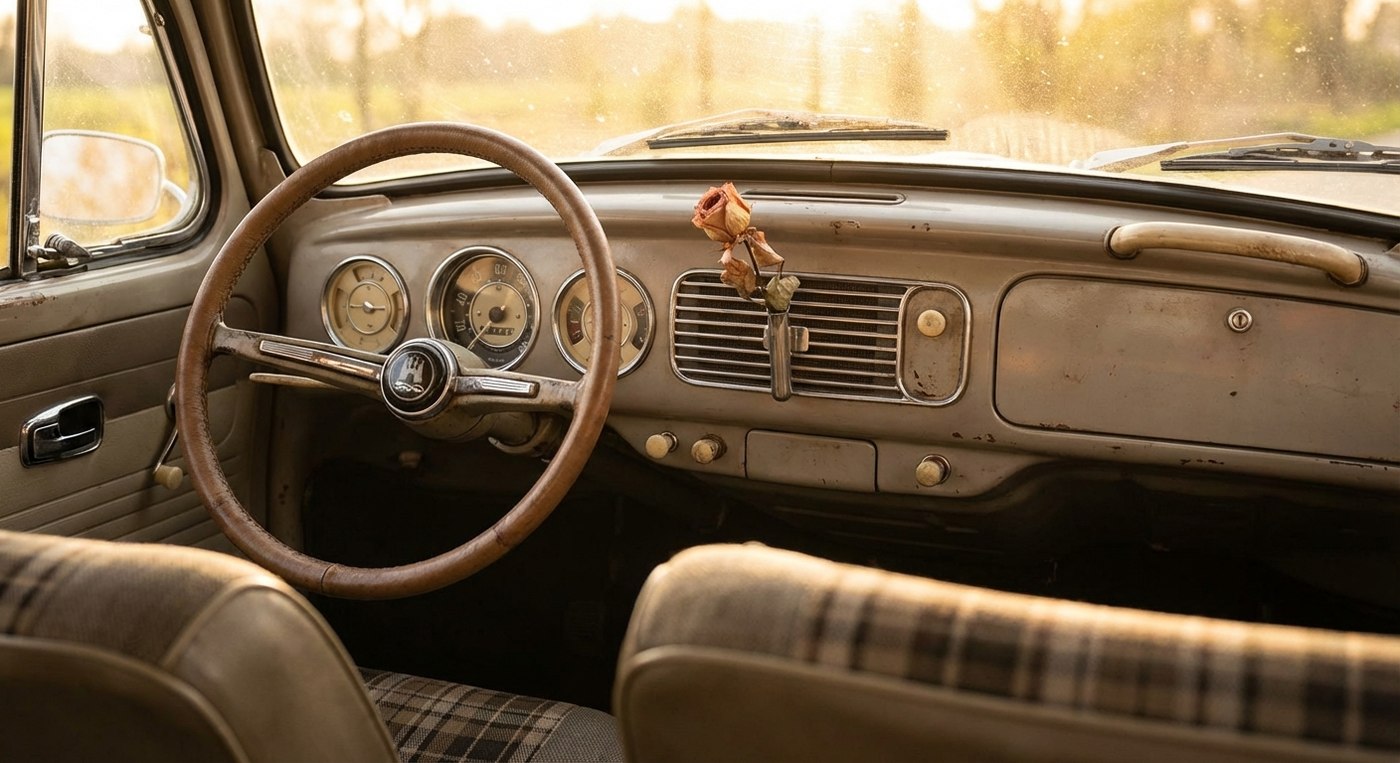
Classic car culture has never been stronger. Concours events, car meets, and the growing community of younger collectors drawn to pre-digital vehicles have pushed values up across the board — but the Beetle remains one of the most accessible entry points into classic car ownership. A solid driver-quality example can still be found for under $20,000 CAD. A show-quality restored car commands $40,000–$60,000+.
More importantly, the Beetle is one of the easiest classic cars to live with. Parts are abundant, the mechanical simplicity means maintenance is achievable for anyone willing to learn, and the community of Beetle owners worldwide means help is always close by.
The Verdict
Over 21 million built. Six decades of production. An aerodynamic shape arrived at through engineering genius. A cultural legacy that spans continents and generations. The Volkswagen Beetle is not just a good classic car — it is one of the definitive automobiles in history. If you've ever thought about owning one, 2026 is still a reasonable time to act.
And if you're looking for something more contemporary to drive in Vancouver in the meantime, Mogestic's fleet offers the full spectrum — from McLaren supercars to luxury SUVs — available daily across Metro Vancouver.
