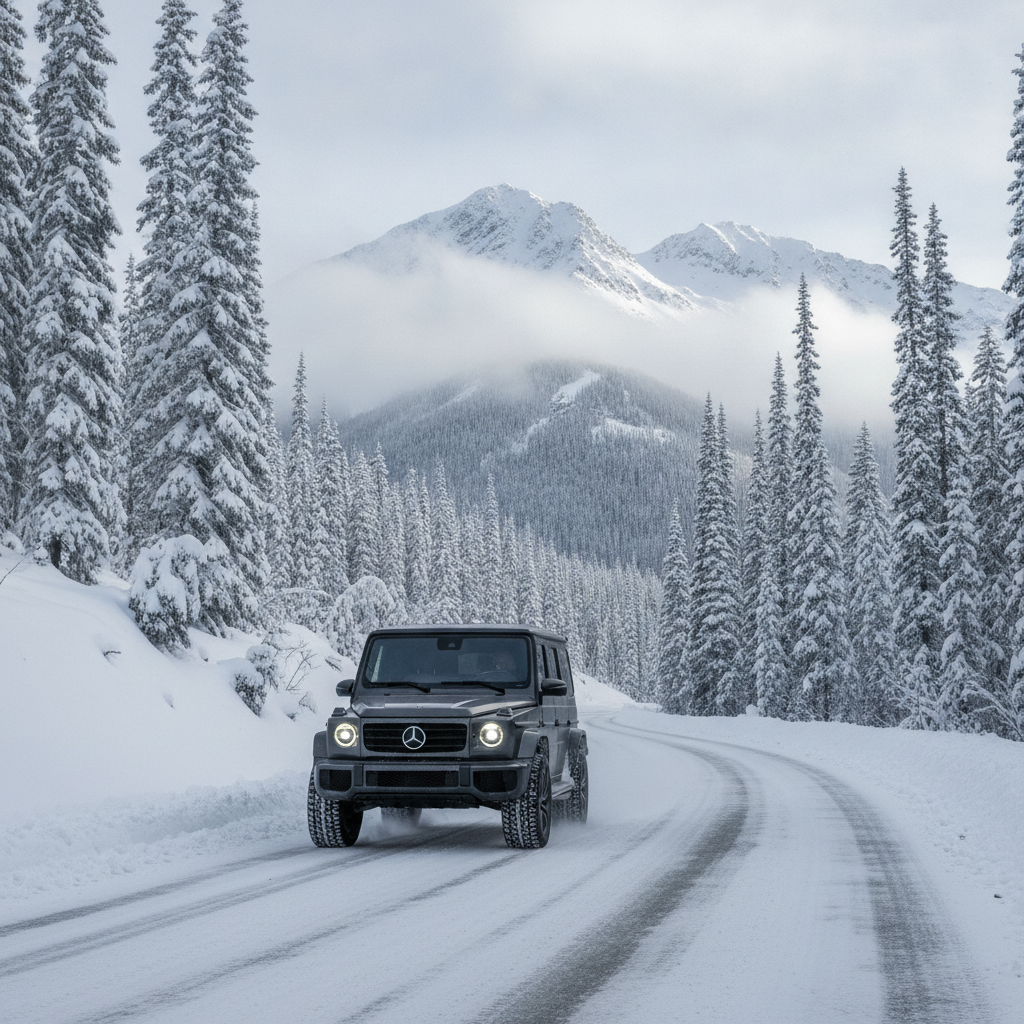
Vancouver's reputation as a rainy city obscures a more dramatic reality. Within an hour of downtown, you can be driving through heavy snow on mountain passes that demand respect and preparation. The Sea to Sky Highway to Whistler, the Coquihalla, the routes to Cypress and Grouse Mountain. These are not urban commutes. They are mountain highways where conditions change by the kilometre, where rain turns to ice without warning, and where the wrong tires can turn a luxury rental into a liability.
For Mogestic clients, winter driving is not something to avoid. It is something to prepare for. A Porsche 911 on proper winter rubber is genuinely capable in snow. A Mercedes G-Class with three locking differentials was literally designed for this. The BMW XM's all-wheel-drive system and air suspension handle slush and ice with composure that all-season tires cannot match. The key is understanding what winter in British Columbia actually requires.
Winter Tire Laws in British Columbia
From October 1 to April 30, winter tires or chains are legally required on most BC mountain highways. This includes Highway 99, the Sea to Sky Highway, which is the main route from Vancouver to Whistler. The law is not a suggestion. Police conduct roadside checks, and fines are issued to drivers without appropriate tires.
Legal winter tires must carry either the M plus S symbol or the three-peaked mountain snowflake symbol on the sidewall, and must have a minimum tread depth of 3.5 millimetres. The mountain snowflake symbol indicates tires that meet severe snow service standards and perform better in cold temperatures than M plus S tires. For the mountain passes around Vancouver, the mountain snowflake rating is the safer choice.
All Mogestic vehicles are equipped with seasonally appropriate tires. In winter, this means genuine winter tires, not all-season compromises. If you are booking a rental between October and April, confirm the tire specification with our team. We do not send clients into the mountains on rubber that cannot handle the conditions.
Why Winter Tires Matter More Than All-Wheel Drive
This is the most misunderstood aspect of winter driving. All-wheel drive helps you accelerate. It does not help you stop or turn. On ice, an all-wheel-drive vehicle with all-season tires will slide straight into a ditch while a two-wheel-drive vehicle with winter tires stops and turns with confidence.
Winter tires use a softer rubber compound that remains flexible below seven degrees Celsius. Their tread patterns are designed to channel snow and slush away from the contact patch. Their siping, the tiny slits in the tread blocks, creates thousands of biting edges that grip ice in a way that performance tires simply cannot.
The Porsche 911, for all its engineering brilliance, is rear-engined and rear-wheel drive in its base configuration. On snow with summer tires, it is genuinely dangerous. On snow with proper winter tires, it is surprisingly capable and genuinely fun. The same principle applies to every vehicle in the Mogestic fleet. The tires are what separate a controlled winter drive from an insurance claim.
The Sea to Sky Highway in Winter
The Sea to Sky Highway from Vancouver to Whistler is one of the most beautiful drives in North America. In winter, it is also one of the most demanding. The road climbs from sea level to over six hundred metres at Whistler, passing through multiple microclimates where rain can become freezing rain, sleet, or heavy snow within a few kilometres.
Variable speed limits are enforced on Highway 99, with electronic signs that adjust based on conditions. The posted limit may be ninety kilometres per hour in clear weather and sixty or lower in snow. These limits are enforced, and for good reason. The highway has sheer drops, narrow lanes, and sections where the pavement is perpetually shaded and prone to black ice.
The approach is straightforward. Check DriveBC before you leave. Leave extra time. Keep your headlights on. Maintain a following distance of at least four seconds. And do not use cruise control on slippery surfaces.
Mountain Pass Driving Tips
- Check conditions before departure. DriveBC.ca provides live webcams, road conditions, and weather forecasts for every major highway in the province.
- Fill up before you climb. Gas stations are sparse on mountain routes, and winter driving consumes more fuel. Start with a full tank.
- Clear all snow and ice from the vehicle. This includes the roof, where snow can slide onto the windshield when you brake. It is also legally required in British Columbia.
- Pack an emergency kit. Blankets, warm clothing, a flashlight, a shovel, and traction aids like sand or kitty litter. Fully charge your phone before departure.
- Watch for black ice. Shaded corners, bridges, and overpasses freeze first. If the road looks wet but the temperature is near or below freezing, assume it is ice.
- Descend in control. Use engine braking on steep grades rather than riding the brakes. If your vehicle has ABS, apply firm, steady pressure in an emergency stop.
- Do not pass snowplows. They throw up massive plumes of snow and salt that reduce visibility to zero. Stay well back and let them do their job.
Which Mogestic Car Fits Winter Best?
| Vehicle | Winter Strength | Why It Works Here |
|---|---|---|
| Porsche 911 Carrera | Precision and balance | The rear-engine weight distribution provides natural traction on snow. With winter tires, the 911 is surprisingly capable and genuinely rewarding on winding mountain roads. From $558/day. |
| Mercedes G-Class | Ultimate capability | Three locking differentials, a ladder-frame chassis, and genuine off-road heritage make the G-Class the most capable winter vehicle in the fleet. It was designed for conditions worse than anything near Vancouver. From $625/day. |
| BMW XM | Comfort and confidence | The all-wheel-drive system and air suspension adapt to changing conditions automatically. The heated and ventilated seats, combined with the quiet cabin, make winter drives feel effortless. From $888/day. |
Whistler and the Ski Season
Whistler Blackcomb is the largest ski resort in North America, and the drive from Vancouver is the gateway to the experience. The 2026-2027 ski season is projected to open on November 20, 2026, with Blackcomb Mountain typically remaining open into May. Peak season runs from December through March, which is also when driving conditions are most challenging.
Weekend mornings see heavy traffic on Highway 99, particularly after fresh snowfall. Leaving Vancouver by 6 AM avoids the worst congestion and gives you the best chance of finding parking at the mountain. The return drive on Sunday afternoons can be equally busy, with the added challenge of fatigue after a day of skiing.
For Mogestic clients heading to Whistler, we recommend booking the vehicle for the full weekend rather than single-day rentals. This eliminates the pressure of returning the car on Saturday evening and allows for a more relaxed Sunday departure.
Frequently Asked Questions
Are winter tires included in the rental?
Yes. All Mogestic vehicles are equipped with seasonally appropriate tires. From October 1 to April 30, this means genuine winter tires with the mountain snowflake symbol. We do not rent vehicles with all-season tires during winter.
Can I drive a sports car in the snow?
With proper winter tires, yes. The Porsche 911 is genuinely capable on snow due to its rear-engine weight distribution and precise chassis control. The key is respecting the conditions and avoiding sudden inputs.
What happens if I get stuck?
Mogestic provides 24-7 roadside assistance for all rentals. If you become stuck or stranded, call our support line immediately. Do not attempt to dig yourself out in dangerous conditions.
Is the Sea to Sky Highway safe in winter?
Yes, when driven with appropriate preparation and respect for conditions. The highway is ploughed and maintained, variable speed limits are enforced, and winter tire laws are actively policed. Thousands of drivers make the trip safely every winter.
Do I need chains?
For the highways around Vancouver, winter tires are sufficient in most conditions. Chains are required only in extreme conditions or on specific high-elevation routes. If chains are needed, our team will advise at the time of rental.
What is the best winter vehicle for first-time luxury renters?
The Mercedes G-Class. Its upright driving position, commanding visibility, and genuine all-weather capability make it the most forgiving choice for drivers who are new to winter mountain roads.
The Winter Experience
Winter driving in British Columbia is not a hardship to be endured. It is a genuinely beautiful experience when done properly. The mountains are blanketed in snow, the air is clear, and the roads are quiet outside of peak ski traffic. Arriving at Whistler in a warm, leather-scented cabin with heated seats and a view of the snow-covered peaks through the windshield is one of the most satisfying ways to begin a ski weekend.
The difference between a stressful winter drive and a memorable one comes down to preparation. The right tires. The right vehicle. The right mindset. Mogestic handles the first two. The third is up to you.
Book Your Winter Rental
Ready to experience Vancouver's winter roads in a Porsche 911, BMW XM, or Mercedes G-Class with proper winter tires? Call Mogestic at (604) 841-0366 or book online. We offer direct delivery across Metro Vancouver, including downtown Vancouver, North Vancouver, Richmond, and YVR. Whether you are heading to Whistler for the weekend or exploring the winter mountains for the first time, we will make sure you are properly equipped.
